



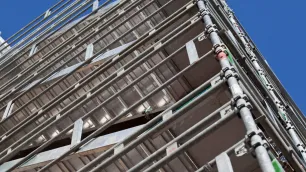
This informal CPD article ‘Aluminium Scaffold Erection and Dismantle’ was provided by SCAFFST, an importer and distributor providing scaffolding supplies and PPE within the construction industry. They strive to set a standard in the industry by continuously improving safety performance.
Aluminium scaffolding systems have become increasingly common on construction sites due to their lightweight structure, portability, and ease of assembly (1,2). Compared to traditional steel scaffolds, aluminium systems offer significant advantages such as faster installation, improved manoeuvrability, and enhanced corrosion resistance (1,2).
However, despite these benefits, improper setup or dismantling can still lead to serious safety hazards (1,2,4). Ensuring safe installation and removal practices is essential not only for compliance with safety regulations but also for protecting workers and maintaining efficiency on site (1,4).
1. Advantages of Aluminium Scaffolding
Aluminium scaffolds are known for their light weight—approximately one-third the weight of steel alternatives—which significantly reduces manual handling risks (1,2). Their modular design allows for quick assembly, making them ideal for short-term tasks, indoor maintenance, electrical work, and façade operations (1,2). Additionally, their resistance to rust and corrosion extends their lifespan and ensures long-term stability when properly maintained (1,2).
However, because aluminium is lighter, it may also be more prone to movement under wind loads or uneven surfaces (2). Therefore, strict adherence to installation guidelines is essential (1,2,4).
2. Pre-Installation Requirements
Before any aluminium scaffold is erected, a thorough site assessment must be conducted (1,2,3). This includes evaluating:
- Ground Conditions: The surface must be level, solid, and capable of bearing the scaffold load. Soft or sloped ground requires base plates, sole boards, or stabilizers (1,2,3).
- Environmental Factors: Wind, rain, and surrounding activities should be considered. Aluminium towers, in particular, are sensitive to strong wind loads (1,2).
- Load Calculations: The intended duty rating must be identified—light, medium, or heavy duty. Overloading is one of the most common causes of scaffold failure (1,2,4).
All materials must be inspected prior to assembly. Damaged frames, cracked welds, bent braces, or worn wheels must never be used (1,2).
3. Safe Installation Procedures
Aluminium scaffolding must always be erected by trained and competent personnel (1,2,4). Standard installation guidelines include:
a. Base Setup
The foundation is the most critical part of the structure (1,2). Adjustable base plates or lockable castor wheels must be installed on firm ground (1,2,3). Levelling must be completed before any frames are added (1,2).
b. Frame Assembly
Frames should be lifted into place rather than dragged (1,2). Horizontal braces and diagonal supports must be secured as per the manufacturer’s instructions (1,2,3). Missing braces significantly reduce structural stability and are a leading cause of collapse (1,2).
c. Guardrails and Platforms
Platform boards must be locked into place, and top guardrails, mid-rails, and toe boards must be installed at every working level (1,2,3). Many accidents occur due to missing guardrails during quick maintenance work (1,2,4).
d. Access and Fall Prevention
Internal ladders or built-in access systems must be included (1,2). Workers should never climb the exterior of the tower (1,2). If required by national regulations, fall-arrest systems must be used during assembly until guardrails are installed (1,4).
e. Stability Measures
Stabilisers or outriggers must be attached according to the working height (1,2,3). For mobile aluminium towers, wheels must be locked before use and unlocked only when the tower is being repositioned—and never while someone is on it (1,2).
4. Safe Dismantling Procedures
Dismantling must follow the reverse order of installation and be carried out with the same attention to safety (1,2). Key points include:
- Remove components systematically from the top down (1,2).
- Maintain guardrails until the last possible stage (1,2).
- Never drop components from height; they must be lowered safely (1,2).
- Secure tools and materials to prevent falls (1,2).
- Keep the area below the scaffold clear of personnel and equipment (1,2).
Incorrect dismantling often leads to falling objects and structural instability, posing a severe risk to workers and bystanders (1,2,4).
5. Inspections and Documentation
Regular inspections are essential for both installation and ongoing use (1,2,4). A competent inspector should verify:
- Vertical and horizontal alignment (1,2)
- Tightness of connections (1,2)
- Condition of wheels, frames, and platforms (1,2,3)
- Completeness of guardrails and stabilisers (1,2,3)
Inspection records should be maintained according to OSHA, HSE, or local regulatory requirements, typically every 7 days and after any adverse weather (1,2,4).
Conclusion
Aluminium scaffolding offers unparalleled advantages in mobility, convenience, and efficiency (1,2). However, these benefits can only be realised when assembly and dismantling are carried out safely and in compliance with established regulations (1,2,3,4).
Proper training, careful site assessment, correct component use, and thorough inspections together create a safe working environment (1,2,4). Aluminium scaffolding safety is not only a technical requirement but a professional responsibility that protects workers and ensures project success (4).
We hope this article was helpful. For more information from SCAFFST, please visit their CPD Member Directory page. Alternatively, you can go to the CPD Industry Hubs for more articles, courses and events relevant to your Continuing Professional Development requirements.
REFERENCES
(1) OSHA 1926 Subpart L – Scaffolding
(2) HSE Construction Guidance – Aluminium Tower Scaffolds
(3) EN 1004 – Mobile Access and Working Towers (MAWT)
(4) ILO Occupational Safety and Health Guidelines