



This informal CPD article ‘Becoming an Internal Quality Assurer (IQA) for assessment practice’ was provided by Akhita Benjamin, Director at Quality Assured 3.0, an Education and Training organisation based in the United Kingdom.
As a tutor/assessor, you may be thinking about how to develop your career and what to do next. Have you been in your current role for some time and want to find new challenges and opportunities to move forward?
Becoming an Internal Quality Assurer (IQA) can be the natural next step for experienced tutors who have worked in accredited programmes. Internal quality assurance is the structured process that is set up to monitor the quality of assessment practices for accredited programmes. [1]
In this article we are going to explore how strengths, skills and qualities can be identified and used to move into IQA work.
Benefits of CPD
Engaging in CPD sessions is useful for many reasons – it reinforces good practice, it provides new information and stimulates new ideas as well as helping us to meet new people in our profession. Sometimes CPD alone may not be enough to help us take that next step forward.
Having a coach/mentor or line manager who can see your potential and guide you in your development is ideal, but this may not always be a reality. Perhaps your Team Leader/Line Manager appreciates your skills but, due to their own focus on targets, deadlines, KPIs etc., they keep you in the same role without considering your ability to fully develop your innate talents. To take ownership of your own career development, a good starting point could be reflecting on your core strengths, skills and qualities.
Sometimes we may not recognise our own strengths and what we bring to the team in terms of our skills and qualities. Taking time out for reflection may help to give you a clearer awareness and appreciation of where your strengths lie and how to use them to develop your career (or even change careers if necessary).
Working on areas for growth and improvement, where necessary, is a positive step for strengthening your skills. However, finding a balance between working on strengths and areas for improvement will help to keep you motivated while improving on things that don’t come easy for you naturally. You may feel more empowered by acknowledging your strengths and spending some of your time and energy honing your natural talents. [2]
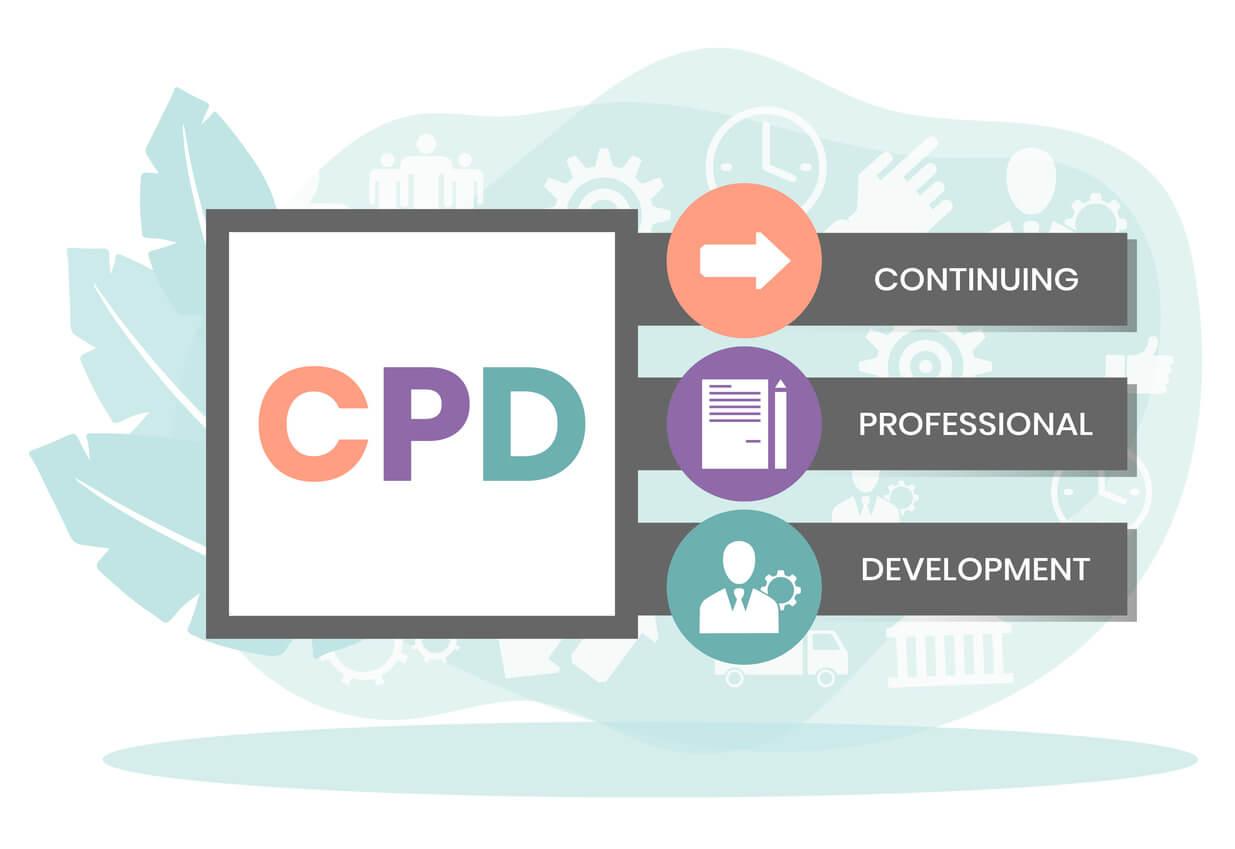
Engaging in CPD sessions
How to recognise your strengths
1. Home in on the things that you really enjoy doing – these are things that come naturally to you and make you feel in your comfort zone. If you are good at something, you are more likely to use those skills more often and therefore become even better at doing it. Recognise that this is a core strength and use it to build on other things.
2. Be careful not to stagnate in your comfort zone. Try new things and step outside the box from time to time. This will help you to draw out hidden strengths and develop new talents.
3. It can be very useful to ask others for feedback on what they think you do well. This does not only have to be your coach/mentor, line manager or supervisor. Ask a friend, family member or colleague. Compare the feedback and identify any commonalities. You may realise that you have strengths that others value, but you have overlooked them or taken them for granted.
4. Reflect on the things you have already accomplished either at work or in another capacity (in a sports club, voluntary organisation etc.). If you feel really proud of the contribution you have made and see the value you have brought to an organisation or project, reflect on what core strengths were being used there.
5. Don’t underestimate the value of using a self-assessment tool. Sometimes these “find your strengths” questionnaires may seem like a gimmick, but there are some well-structured systems that can really help you to think deeply about where your core strengths lie.
By their very nature they are quite generic but can provide some useful insights that you can personalise once you have the self-awareness. There is a level of ownership and accountability that follows, which helps you to set goals and increase on success. They can also help you to find the right vocabulary to articulate your strengths in CVs and prospective applications. [3] [4]
The skills and qualities of an IQA
- Communication skills are very important for giving feedback, both verbal and written, conducting meetings and for writing IQA reports. [6]
- Attention to detail is needed for ensuring consistencies are maintained throughout the assessment process and that regulations are being followed. [6]
- Good subject knowledge is necessary to ensure that the qualification is being delivered to the correct standard and that all regulatory requirements are met. [5]
- ICT skills are increasingly important because many qualifications are being delivered and assessed online and IQAs need to use Learning Management Systems (LMS).
- Organisational skills are required to manage the various tasks involved in the IQA process including sampling activities and signing off for final certification. [5]
- Working with others is key to developing good professional relationships with all stakeholders including tutors, assessors, learners and course managers. [6]
- Fairness and transparency must be used to ensure that all judgements made about assessments are consistent, impartial and not discriminatory in any way.
Taking the next step
As an experienced tutor/assessor, you have the starting point for moving into IQA work with your specialist subject knowledge and teaching qualifications. If you have already taught accredited programmes, you will have experience of assessment criteria and would have worked alongside an IQA, so start by talking to your IQA colleagues about the work that they do. [5]
Depending on the size of your organisation, you may be able to shadow an IQA and/or support with various aspects of the activities in the IQA process. Tutors are expected to attend standardisation meetings, so you will already be familiar with this aspect of the role in terms of qualification requirements.
Before taking on the role of an IQA most organisations would want you to have, or be working towards, a Level 4 IQA qualification. [5] [6] Your organisation may offer this as part of your in-house training or can help you to source an external training provider for you to start a course. Being an IQA is a role that can be done alongside your job as a tutor/assessor (You cannot quality assure a course for which you are the tutor or assessor) so you can start to apply for freelance or part-time work.
Conclusion
Working as an IQA can be rewarding in many ways and it can sharpen your skills as a tutor/assessor. Acknowledge your skill set and recognise your strengths so you can work on developing them further. Once you start engaging in activities that give you some insight into IQA work, it can boost your confidence to step into a new role. This could be a great opportunity for promotion, enhanced job satisfaction, working as a freelance so you control your own time/schedule and increasing your income potential for the future. [5]
We hope this article was helpful. For more information from Quality Assured 3.0, please visit their CPD Member Directory page. Alternatively, you can go to the CPD Industry Hubs for more articles, courses and events relevant to your Continuing Professional Development requirements.
References
[1] Hilary Read, The best quality assurer’s guide (2012)
[2] Introduction to Strength-based Development, Gallup (2019) https://s3.amazonaws.com/kajabi-storefronts-production/sites/2147503374/themes/2148062327/downloads/l2r8mgrLRMWipB583BWD_Introduction_to_Strengths-based_development.pdf
[3] 9 free strengths assessments and tests
https://positivepsychology.com/strength-finding-tests/
[4] 10 Self-Assessment Examples to Elevate Your Growth
https://www.klarahr.com/blog/10-self-assessment-examples-to-elevate-your-growth/
[5] Exploring the Role of an IQA: Responsibilities and Requirements of an IQA Job - Working in Further Education, by Alex Lockey (February 22, 2023)
https://www.boltjobs.com/blog/role-of-an-iqa
[6] 5 Skills You Need to Be an IQA - CTC Training
https://ctccourses.org/help-advice/5-skills-you-need-to-be-an-iqa/
[7] National Occupational Standards CLDLD11 - Internally monitor and maintain the quality of assessment (2021) CLD Standards Council Scotland
https://www.ukstandards.org.uk/en/nos-finder/CLDLD11/internally-monitor-and-maintain-the-quality-of-assessment