


This informal CPD article ‘The Importance of Integration in Perimeter Security’ was provided by Southwest Microwave, an organisation with experience in the design and manufacture of integrated high-security outdoor electronic perimeter intrusion detection systems.
Integration is the process of creating connections between multiple standalone devices to create a system with components that work together, which is vital within physical security. As each site has its own individual requirements, this means the end user will purchase a unique combination of security technologies and components, since such a wide range of manufacturers exist for each technology. Integration enables these devices to work together, ensuring the security system is fully interlinked.
The Process of Integration
To integrate a security device into an existing security system, and to allow for all unique hardware devices to be managed through one centralised software, integrators require access to the ‘plug-in’. If the desired direct integration already exists, then it can simply be purchased alongside the VMS (Video Management System).
When designing a new security system or implementing an additional layer of security to an existing system, existing integrations can be found on manufacturers' websites. As well as ensuring that no one vendor has a tight monopoly for integration with PIDS (Perimeter Intrusion Detection System), this also increases their product portfolio and sales potential.
Developing Integration
However, when there is no existing integration available, an integration must be developed. This begins by the integrator accessing the device's SDK (Software Development Kit), which is a collection of tools, libraries, documentation, and frameworks that software developers use to build applications for the specific device (1).
The process consists of a developer writing new code based on the SDKs and undergoing a period of testing. For example, developers are authorised to remotely access a test field, allowing them to go through trial and error in a controlled environment, which is designed to emulate all possible end-user sites. This continues until a successful integration is created, which in this example means the device can be managed through the same GUI (Graphical User Interface) as the other technologies that make up the rest of the security system. When a successful integration is finalised, this plug-in (or direct integration) becomes available in the VMS portfolio. As each technology has its own SDK, each device will need to be integrated individually for the PSIM (Physical Security Information Management) or VMS in use.
Use of Integration for Perimeter Defence
When all devices are successfully integrated, this allows the entire system, made up of a range of security products, to be monitored at one control point. This centralisation allows a security system made up of fence detection, microwave links, CCTV, lighting, etc from separate manufacturers to all be managed in one easy-to-use interface. Moreover, this integration means the devices can work together, such as a fence detection system detecting movement at a specific zone, triggering the closest CCTV camera to point towards this zone. Not only does this enhance surveillance, but it can also generate cost savings since the PTZ (pan-tilt-zoom) camera can reliably cover a greater area than static CCTV.
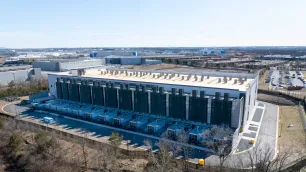
The use of PIDS varies enormously depending on the type, location and size of a site (2). A PIDS system will be very different for a nuclear power station compared to a small utility site such as an electrical sub-station. For the former, extensive integration would be required, likely supporting other devices as well as PIDS. Such a system would be managed by many operators logging on for time shifts, with well devised operating procedures. Conversely, the latter option would be a small PIDS, likely reporting to an alarm panel with remote access off-site to a central monitoring hub. The integration in this case would be to the alarm panel to aid in its configuration for perimeter zone reporting. But no matter the size of the site, successful integration optimises perimeter defence, ensuring critical infrastructure gets the protection it requires.
We hope this article was helpful. For more information from Southwest Microwave, please visit their CPD Member Directory page. Alternatively, you can go to the CPD Industry Hubs for more articles, courses and events relevant to your Continuing Professional Development requirements.
References
- https://aws.amazon.com/what-is/sdk
- https://www.npsa.gov.uk/intrusion-detection