




This informal CPD article, ‘Striking a Chord: Marketing Mastery in the Musical Instrument Industry’, was provided by Evolve Youth Academy. who offer a range of education and activity provision for learners of all ages.
The musical instrument industry offers a fascinating example of how effective marketing can shape perception, create loyalty, and position products in a competitive global marketplace. This analysis explores how leading guitar manufacturers have applied marketing principles to connect with diverse audiences, sustain brand differentiation, and maintain long-term market relevance.
The Marketing Mix: Tuning into Consumer Needs
The marketing mix, as defined by Hall et al. (2008), consists of four key elements: product, price, promotion, and place, each of which must align to satisfy consumer needs and preferences. In the musical instrument sector, this mix must appeal to both emotional and practical dimensions: musicians seek not only functional instruments but also tools that embody personal expression and identity.
Product and Brand Image: Crafting the Sound
Successful manufacturers understand that instruments are more than utilitarian products; they are extensions of the musician’s artistry. Product strategies, therefore, emphasise craftsmanship, innovation, and genre-specific design (Heany et al., 2015). Companies often collaborate with well-known artists to co-design instruments that resonate with niche audiences, while limited-edition and signature models enhance perceived exclusivity and collectability.
In addition, ongoing investment in extended-range or specialised designs demonstrates how innovation can become a core differentiator. By developing unique hardware configurations and sound-shaping features, manufacturers appeal to players seeking individual expression, ensuring the brand remains synonymous with creativity and technical advancement.
Pricing Strategy: Hitting the Right Note
Pricing within the industry typically follows a tiered approach, offering affordable entry-level instruments alongside professional-grade and custom models. This structure allows brands to serve multiple consumer segments simultaneously, from aspiring beginners to touring professionals. Affordable ranges build early loyalty, while premium lines reinforce prestige and quality associations. Balancing accessibility with perceived value is crucial for sustaining brand equity across such a diverse market (Difference Between, 2020).
Place: Where Music Meets Market
The distribution landscape for musical instruments has evolved dramatically with digital transformation. Leading companies employ a multi-channel approach that integrates direct-to-consumer sales, online retail platforms, specialist music stores, and significant trade events (Xiao, 2020). Such accessibility ensures that products remain visible and attainable, supporting global reach while preserving strong relationships with local retailers and educators.
Promotion: Amplifying the Brand
Promotional strategies in the sector blend traditional and modern approaches. Print advertising, artist endorsements, trade shows, and demonstration events continue to be influential, while social-media marketing, influencer collaborations, and video showcases have become essential for engaging younger audiences (Luenendonk, 2021). The most successful campaigns not only promote instruments but also cultivate communities around music creation, reinforcing brand identity and emotional connection.
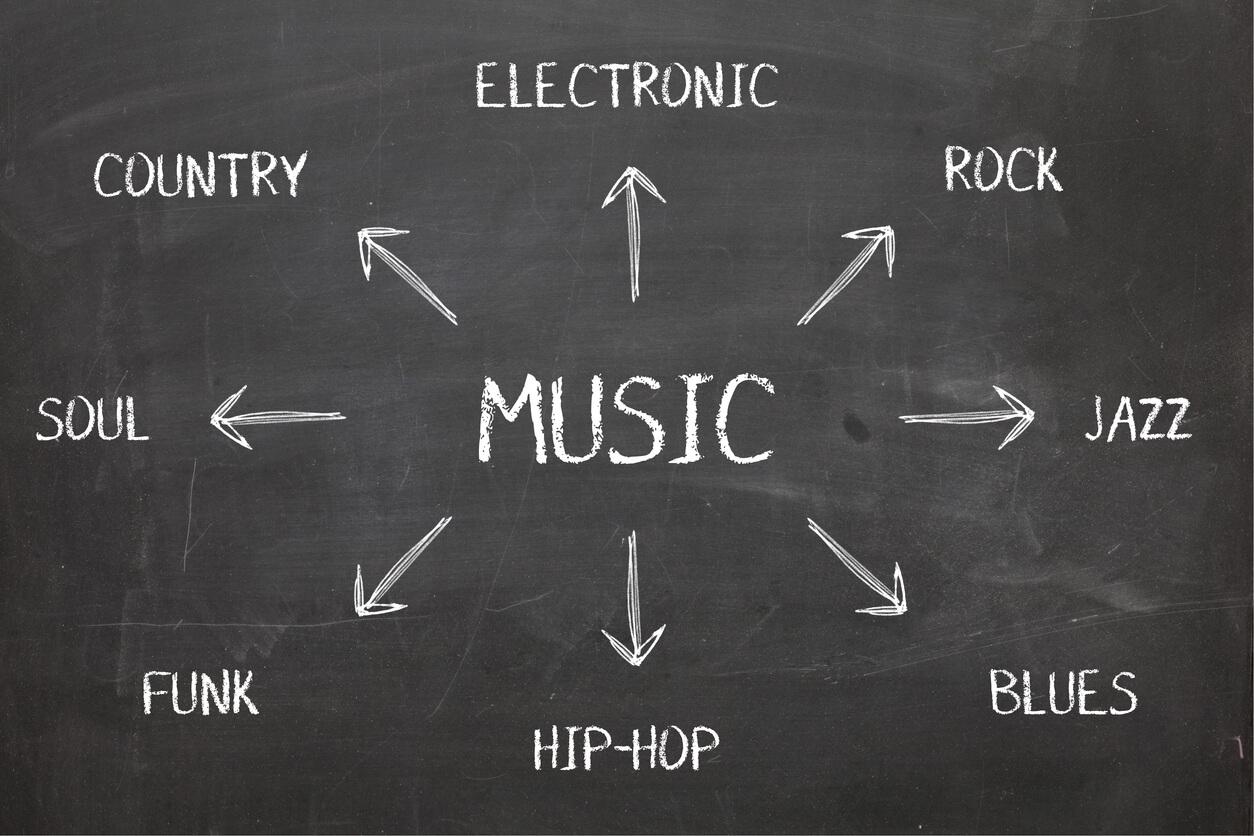
Specific musical genres
Differentiation and Competitive Advantage: Striking the Right Balance
Differentiation is vital in a market where products often share similar functions and aesthetics. Brands that focus on specific musical genres, extended-range instruments, or distinctive design philosophies gain an edge through innovation and authenticity (Brown, 2013). By consistently developing hardware improvements, such as unique bridge systems, pickup configurations, or ergonomic body shapes, manufacturers create a strong association between their products and technical excellence.
A diverse product portfolio that includes guitars, basses, amplifiers, effects pedals, and accessories also strengthens brand ecosystems, enabling cross-selling opportunities and customer retention. Differentiation is therefore achieved not only through product features but also through holistic brand experience and identity.
Total Product Concept and Coping with Commoditisation: Beyond the Strings
Commoditisation is a persistent challenge in the musical instrument industry, where mass-produced designs can make products appear interchangeable. To counter this, successful manufacturers adopt a total product concept that goes beyond functional performance (Bhasin, 2019). Instruments are marketed as symbols of lifestyle, creativity, and individuality, reflecting the aspirations of the players who use them.
By cultivating emotional attachment and cultural meaning, companies transform their instruments into lifestyle products. This approach allows them to command loyalty and price stability even in highly saturated markets, differentiating themselves from competitors that focus solely on technical specifications.
Segmentation: Understanding the Market’s Melody
Effective market segmentation remains a cornerstone of industry success (Ndukwu, 2020). Manufacturers segment the market by playing ability, genre preference, age, and purchasing power, tailoring their offerings to each group. For example, introductory models target beginners and students, while professional-grade instruments cater to experienced players seeking reliability and tone precision.
This segmentation allows firms to align product quality, aesthetic design, and price to the needs of specific consumer profiles. Adjusting positioning over time, for instance, by creating more accessible product ranges or gender-neutral designs, can also expand audience reach and foster inclusivity across diverse demographics.
Recommendations: Expanding the Audience
Looking forward, the industry can continue to evolve by engaging underrepresented demographics such as younger working-class musicians, non-male players, and emerging creators in non-Western regions. Marketing that reflects diversity in skill level, gender, and culture will help broaden participation in music-making and strengthen brand relevance in a changing global landscape.
Conclusion
The success of major musical instrument manufacturers illustrates how the strategic use of the marketing mix, differentiation, and segmentation can orchestrate enduring market success. By integrating emotional resonance with functional value, brands within this sector have demonstrated that instruments can transcend their utilitarian purpose to become cultural symbols. As the industry moves forward, continued innovation, inclusivity, and audience understanding will ensure that these companies remain in harmony with the evolving rhythm of the marketplace.
We hope this article was helpful. For more information from Evolve Youth Academy, please visit their CPD Member Directory page. Alternatively, you can go to the CPD Industry Hubs for more articles, courses and events relevant to your Continuing Professional Development requirements.
References
Bhasin, H. (2019) Commoditisation: Meaning, examples and how to avoid commoditisation. Marketing 91.
Brown, P. (2013). Differentiation and its role in competitive advantage. Culttt.
Difference Between (2020) Pricing strategies and brand differentiation in the guitar industry. Management Study Guide.
Hall, D., et al. (2008). The marketing mix. In: Marketing Essentials.
Heany, B., Li, J., Park, H., Noson, A. (2015). Genre-focused appeal and product strategy in musical instruments.
Luenendonk, M. (2021). Understanding the marketing mix concept – 4 Ps. Cleverism.
Ndukwu, D. (2020) Market segmentation: The five types, examples and use cases. Management Study Guide.
Xiao, E. (2020). Distribution trends in the global musical instrument market. Guitar Industry Journal.