

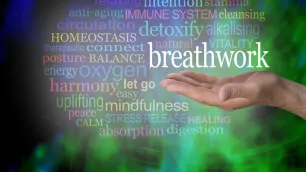
This informal CPD article ‘What Is Breathwork?’ was provided by The Breathwork Reset, who offer transformative breathwork and meditation techniques combining ancient pranayama breathing methods with guided visualisation and modern music technology using the Soma Breathwork Protocol.
Breathwork is both ancient and strikingly modern. Long before it gained widespread attention, the conscious use of breath was woven into the fabric of cultures around the world. Yogic pranayama in India, Taoist breathing practices in China, Buddhist meditation, Indigenous ritual breathing, and mystical traditions across Africa, the Middle East, and the Americas all recognised the breath as a bridge between body, mind, and spirit.
In recent decades, breathwork has also found its way into clinical and performance settings. Psychologists use it to support trauma healing and emotional regulation (1). Doctors and researchers study its effects on nervous system balance, heart rate variability, and immune function (2). Elite athletes use breath training to improve endurance, recovery, and mental focus (3). Modern breathwork pioneers like Wim Hof have captured global attention by demonstrating that conscious breathing can unlock capacities we once believed were impossible (4).
At its core, breathwork is the intentional practice of working with the breath to influence our physiology, psychology, and state of awareness. To understand how it works, it helps to explore the main facets of breath science and practice.
Unconscious Breathing Habits, The Hidden Driver of Physiology
Most of the time, we breathe unconsciously. These default breathing patterns are shaped by posture, stress, trauma, lifestyle, and even cultural norms. While breathing may seem like nothing more than air moving in and out of the lungs, it is actually a powerful regulator of the body’s internal environment. Our breathing patterns influence blood pH, carbon dioxide and oxygen balance, heart rhythms, and the state of the nervous system (3). The speed at which we breathe, how deeply we breathe, and how we breathe all matter. Different types of breath patterns can shift autonomic nervous system activity, subtly affecting physiological and emotional states (2).
Nose breathing versus mouth breathing also has profound effects. For example, nasal breathing supports nitric oxide production, which plays a role in blood vessel dilation and oxygen delivery (3). Even the ratio of inhale to exhale can influence internal states. Because these habits operate below conscious awareness, many people live in a state of chronic over breathing or tension without realising it. Breathwork begins by bringing awareness to these patterns, because what we become aware of, we can change.
Conscious Breathing Exercises Regulating Attention and Stress
The second facet of breathwork involves deliberate, conscious breathing techniques designed to regulate the nervous system, improve focus, and manage stress. These practices are often the most accessible entry point for people new to breathwork. One well-known example is box breathing, used by Navy SEALs and other high-performance professionals (5). This technique involves inhaling, holding, exhaling, and holding again for equal counts, creating a steady rhythm that stabilises attention and reduces stress under pressure. Breath patterns can influence the nervous system in ways that affect attention and emotional state.
Faster or more rhythmic breathing patterns can be used strategically to influence energy, focus, or mood (5). These techniques are not about forcing the breath, but about learning to work with it using breath as a remote control for the nervous system. Over time, conscious breathing practices build resilience. They help us respond rather than react, creating space between stimulus and response (1). In a world of constant notifications, cognitive overload, and chronic stress, this ability to self-regulate is nothing short of transformative.
Breathwork for Peak Performance
Beyond regulation and relaxation, breathwork can also be used to enhance performance and expand physiological capacity. One area of growing interest is intermittent hypoxia brief, controlled exposures to lower oxygen levels through specific breathing methods. These practices can stimulate adaptations such as improved oxygen efficiency, increased red blood cell production, and enhanced mitochondrial function (3). Athletes use them to improve endurance and recovery, while researchers are exploring their potential benefits for metabolic health, longevity, and resilience (3).
Cold exposure combined with breathwork is another example of how breath can be used to train the nervous system and stress response (4). Breathwork is central to the Wim Hof Method, which combines specific breathing techniques with cold exposure and mental focus to achieve extraordinary endurance feats (4). Research has examined the physiological effects of his method, showing changes in stress hormone regulation, inflammation markers, and nervous system activity, though studies are ongoing (2)(5). At this level, breathwork becomes a form of training, conditioning the body and mind to operate more efficiently and adaptively (3).
“Breathing Plus” Expanded States and Transformational Practices
The final facet of breathwork moves beyond regulation and performance into the realm of altered and expanded states of consciousness. Researchers refer to these approaches as “breathing plus” practices that combine breath with rhythm, music, movement, or intention to access extraordinary inner experiences (6). Methods such as Holotropic Breathwork, breakthrough breathing, and Soma Breathwork use sustained, intentional breathing patterns to quiet the thinking mind and open pathways to heightened awareness (6). Participants often report emotional release, deep insight, creative breakthroughs, and a sense of connection that transcends ordinary perception (6).
These practices are not about escape, but about exploration using the breath as a doorway into the subconscious and the deeper intelligence of the body (6). When approached with care, skill, and respect, they can support profound healing and personal transformation (6).
The Breath as a Living Technology
Breathwork is not a single technique, but a spectrum of practices rooted in both ancient wisdom and modern science. From unconscious habits that quietly shape our health, to conscious techniques that regulate stress, to advanced methods that expand performance and awareness, the breath is a living technology we carry with us at all times. In learning to work with the breath, we are not adding something new we are remembering something fundamental. The breath is always there, patiently waiting to guide us back into balance, presence, and vitality (1)(2)(3)(4)(5)(6).
We hope this article was helpful. For more information from The Breathwork Reset, please visit their CPD Member Directory page. Alternatively, you can go to the CPD Industry Hubs for more articles, courses and events relevant to your Continuing Professional Development requirements.
References
- Meta-analysis on breathwork and stress reduction
https://pubmed.ncbi.nlm.nih.gov/36624160/ - Mental health mechanisms and HRV modulation
https://www.nature.com/articles/s41598-022-27247-y - Physiological and neural mechanisms of breathing
https://pubmed.ncbi.nlm.nih.gov/37750243/ - Wim Hof and physiological findings
https://www.nature.com/articles/s41598-023-44902-0 - Box breathing and regulated breathing techniques
https://stackvital.com/methods/breathwork/ - Holotropic and “breathing plus” research on altered states
https://pubmed.ncbi.nlm.nih.gov/40223145/