


This informal CPD article ‘How AI is Revolutionising HR Performance Optimisation’ was provided by Hanover Search Group, an organisation with deep functional knowledge of asset and wealth management, banking, fintech, healthcare & wellness, insurance, private equity, technology and professional services.
In today’s fast-paced corporate landscape, Human Resources (HR) departments are under constant pressure to optimise employee performance, enhance efficiency, and improve workforce management. Artificial Intelligence (AI) has emerged as a game-changer in HR, offering powerful tools to streamline processes, personalise employee experiences, and make data-driven decisions. From recruitment to training, employee engagement, and performance management, AI is reshaping HR strategies, making them more agile and impactful.
AI-Powered Recruitment and Onboarding
One of the most significant applications of AI in HR is in recruitment and onboarding. AI-driven applicant tracking systems (ATS) help HR professionals filter resumes, match candidates with job requirements, and reduce bias in hiring decisions. Machine learning algorithms analyse vast amounts of data to identify the most suitable candidates, improving the efficiency of the hiring process.
Moreover, AI-powered chatbots provide instant support to job applicants, answering queries and guiding them through the application process. Once hired, AI-driven digital assistants streamline onboarding by providing new employees with personalised training materials, compliance documentation, and scheduling assistance. Major technology companies have successfully implemented AI-driven onboarding assistants to accelerate new hire productivity and reduce administrative workload. (Business Insider, 2025)
Enhancing Employee Performance Management
Traditional performance management systems often rely on annual reviews, which can be inefficient and outdated. AI-powered tools offer continuous performance monitoring and real-time feedback, allowing managers and employees to track progress dynamically. AI can analyse key performance indicators (KPIs) and provide personalised recommendations for improvement based on individual performance patterns.
AI-driven sentiment analysis tools also help HR departments understand employee morale and engagement levels by analysing communication data from emails, chats, and surveys. This allows organisations to proactively address workplace concerns before they escalate, ensuring a more productive and satisfied workforce. (Gartner, 2025)
AI in Learning and Development
Personalised learning and development (L&D) programmes are crucial for employee growth and retention. AI-powered platforms analyse an employee’s skills, performance history, and learning preferences to recommend tailored training modules. This ensures that employees receive relevant upskilling opportunities, enhancing their productivity and career development.
Additionally, AI-driven learning management systems (LMS) utilise Natural Language Processing (NLP) and predictive analytics to suggest courses, provide real-time feedback, and assess skill gaps. Companies are increasingly using AI-driven simulations, virtual reality (VR), and gamified learning to create immersive training experiences, boosting engagement and knowledge retention. (Exploding Topics, 2025)
Workforce Planning and Predictive Analytics
AI enables HR leaders to make data-driven decisions by leveraging predictive analytics. AI-powered workforce analytics tools assess historical data, market trends, and employee behaviour to forecast future talent needs, helping organizations optimize workforce planning.
For instance, AI can predict employee attrition by analysing factors such as engagement levels, performance metrics, and feedback. This allows HR teams to take proactive measures, such as offering incentives or career development opportunities, to retain high-performing employees. Leading organisations have been leveraging AI-powered predictive analytics to enhance talent management and succession planning. (Forbes, 2025)

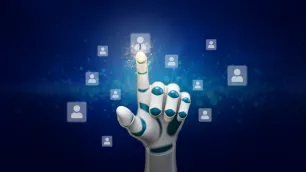
AI enhancing employee engagement
Improving Employee Engagement and Well-being
AI plays a vital role in enhancing employee engagement and well-being by providing personalised experiences and proactive support. AI-driven HR platforms use sentiment analysis and machine learning to assess employee mood and satisfaction, enabling HR teams to take timely actions to improve workplace culture.
AI-powered wellness programmes also track employee health metrics, suggest stress management techniques, and promote work-life balance initiatives. With remote and hybrid work becoming the norm, AI-driven virtual assistants and collaboration tools help employees stay connected and productive, ensuring seamless communication and engagement. (Business Insider, 2025)
Ethical Considerations and Challenges
While AI offers numerous benefits, HR professionals must address ethical concerns such as data privacy, bias, and transparency. AI-driven decision-making systems must be designed to ensure fairness and avoid discrimination in hiring, promotions, and performance evaluations.
Organisations must also prioritise employee consent and data protection when implementing AI-based HR solutions. Transparent AI algorithms and regular audits can help mitigate risks and build trust among employees. Companies that successfully integrate AI with ethical considerations will have a competitive edge in attracting and retaining talent. (Gartner, 2025)
The Future of AI in HR
As AI continues to evolve, its role in HR will become even more significant. Future advancements may include AI-driven career coaching, enhanced AI-generated insights for leadership development, and more sophisticated predictive models for workforce management.
HR departments that embrace AI will be better equipped to handle the complexities of modern workforce management, enhance employee experiences, and drive organisational success. By leveraging AI strategically, HR leaders can transform their roles from administrative functions to strategic business partners.
Conclusion
AI is revolutionising HR performance optimisation by automating repetitive tasks, enhancing recruitment, providing real-time performance insights, and improving employee engagement. As companies continue to adopt AI-driven HR solutions, they must also address ethical concerns and ensure transparency in AI-driven decision-making.
By integrating AI with a human-centric approach, HR professionals can create a more efficient, inclusive, and engaging workplace, ultimately driving long-term business success.
We hope this article was helpful. For more information from Hanover Search Group, please visit their CPD Member Directory page. Alternatively, you can go to the CPD Industry Hubs for more articles, courses and events relevant to your Continuing Professional Development requirements.
References
- Business Insider. (2025). Generative AI and Employee Onboarding. Retrieved from https://www.businessinsider.com/generative-ai-employee-onboarding-human-resources-2025-3
- Gartner. (2025). Top Priorities for HR Leaders. Retrieved from https://www.gartner.com/en/human-resources/trends/top-priorities-for-hr-leaders
- Exploding Topics. (2025). Human Resources Trends. Retrieved from https://explodingtopics.com/blog/human-resources-trends
- Forbes. (2025). AI and Workforce Planning. Retrieved from https://www.forbes.com/sites/bernardmarr/2024/12/10/essential-hr-and-recruitment-trends-for-2025/