



This informal CPD article, ‘Scope 3 Emissions in Practice: A Strategic Measurement and Management Guide’ was provided by IFRS Lab, a leading ESG advisory and training institution committed to advancing sustainability.
As corporate decarbonization strategies mature, one area continues to present outsized complexity and risk—Scope 3 emissions. These indirect emissions, which occur across a company’s entire value chain, often account for the majority of total greenhouse gas (GHG) emissions in sectors like consumer goods, transportation, industrial manufacturing, and finance. Yet, they remain underreported, inconsistently measured, and operationally disconnected from most corporate climate action plans.
The urgency has intensified. Global regulatory developments—including the EU’s Corporate Sustainability Reporting Directive (CSRD), the U.S. SEC’s climate disclosure rules, and California’s climate reporting laws—now explicitly demand Scope 3 transparency. Simultaneously, investors, rating agencies, and procurement stakeholders increasingly view Scope 3 disclosures as a test of climate credibility.
This article examines technical approaches for companies looking to design, execute, and govern a high-quality Scope 3 emissions strategy—aligning regulatory compliance with internal governance and long-term ESG performance.
Why Scope 3 Emissions Are Business-Critical in 2025
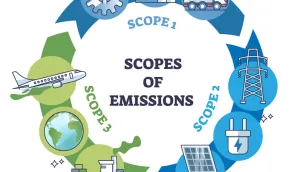
While many organizations have made headway in measuring and managing Scope 1 (direct emissions from owned or controlled sources) and Scope 2 (indirect emissions from purchased energy), Scope 3 emissions represent a broader spectrum. They are generated from upstream and downstream activities not owned or directly controlled by the reporting company, but which the company indirectly influences or benefits from.
Key drivers making Scope 3 a strategic priority:
- Investor Demand: Institutional investors now expect companies to disclose value chain emissions in ESG filings and sustainability-linked financial instruments.
- Regulatory Pressure: From CSRD’s double materiality principle to the SEC’s material risk emphasis, regulators are enforcing traceability in supply chain and product emissions.
- Customer Expectations: B2B and B2C buyers increasingly prefer partners with verifiable climate credentials, particularly in procurement and distribution chains.
- Reputational Risk: Scope 3 negligence has led to greenwashing allegations and ESG rating downgrades—particularly in high-impact sectors.
In short, Scope 3 has moved from a voluntary reporting consideration to a compliance requirement and brand differentiator.
Building a Scope 3 Emissions Strategy: Getting the Foundation Right
The first step in Scope 3 management is understanding the GHG Protocol’s classification, which identifies 15 categories across upstream and downstream activities. These include purchased goods and services, capital goods, fuel- and energy-related activities, waste, transportation, business travel, employee commuting, use of sold products, end-of-life treatment, and more (1) (2).
Companies should begin by:
- Defining Organizational Boundaries: Align Scope 3 assessment with the boundary definitions used for Scope 1 and 2 (control or equity share approach).
- Conducting a Materiality Assessment: Not all Scope 3 categories will be material. A robust materiality screening—supported by stakeholder engagement and third-party validation—helps focus efforts where emissions concentration and risk are highest.
- Setting Clear Objectives: Determine whether the goal is compliance, investor engagement, or decarbonization leadership. This informs data granularity, assurance levels, and strategy alignment.
It’s critical to treat this process as an enterprise initiative—led by ESG teams but involving finance (CFO), sustainability (CSO), and digital/data leaders (CIO/CDO) from the start.
Practical Example: Mapping Scope 3 Emissions in a Consumer Electronics Supply Chain
To illustrate how Scope 3 emissions materialize across a company’s value chain, let’s consider a consumer electronics manufacturer producing smart devices (e.g., smartphones or tablets). Emissions are generated at every stage—from sourcing materials to the product’s end-of-life:
- Purchased Goods and Services:
- Upstream Transportation and Distribution:
- Downstream Transportation and Distribution:
- Use of Sold Products:
- End-of-Life Treatment:
Emissions arise from the extraction and processing of raw materials (e.g., rare earth metals, plastics, and silicon) and the manufacturing of components like microchips, batteries, and screens by upstream suppliers.
Emissions are generated when raw materials and components are shipped via air, sea, or road to assembly factories. These emissions vary depending on distance, fuel type, and mode of transport.
After final assembly, the finished smart devices are distributed to warehouses and retail locations globally, often using carbon-intensive freight networks.
Once purchased by consumers, emissions are generated over the device's lifetime through electricity consumption while charging, usage of digital services, and connectivity infrastructure.
Emissions occur when the device is discarded—whether it is landfilled, incinerated, or recycled. Emissions also depend on how many components are repurposed versus destroyed.
This type of mapping helps organizations understand which Scope 3 categories are most material—and where decarbonization opportunities (e.g., low-carbon logistics, energy-efficient product design, or supplier engagement) can yield the highest impact.
Map key suppliers and emissions data
Data Sourcing: Navigating Complex Value Chains
Scope 3 data acquisition is inherently complex due to the involvement of third-party suppliers, contractors, distributors, and customers. Companies must implement structured and standardized processes to assess, validate, and consolidate this data.
Key considerations include:
- Supplier Engagement: Map key suppliers and gather emissions data via direct requests, lifecycle assessments (LCAs), or environmental product declarations (EPDs).
- Platform Integration: Use disclosure systems to streamline data collection and track supplier performance.
- Timeframe and Format Alignment: Ensure that supplier data corresponds with the reporting period and is verifiable at a product or service level.
- Granularity and Estimations: When primary data is unavailable, use recognized secondary data sources (e.g., DEFRA, EPA, or regional databases). Disclose assumptions transparently.
Companies should embed data validation steps and consider contractual provisions requiring emissions reporting from suppliers and logistics providers.
Calculation Methodologies and Materiality Considerations
The GHG Protocol allows for three principal methods to calculate Scope 3 emissions:
- Supplier-Specific Method: Uses actual, primary data obtained from suppliers. Most accurate but data intensive.
- Average-Data Method: Applies industry average emission factors to known quantities of purchased goods or services.
- Spend-Based Method: Multiplies the economic value of purchased goods/services by an industry emission factor. Least precise, often used in early-stage inventories.
Best practice often involves a hybrid approach—starting with available primary data and filling gaps with sectoral averages. Over time, companies can phase in more supplier-specific data as systems mature.
On materiality, a clear threshold should be applied—often a percentage of the total emissions portfolio (e.g., >5% or 10%)—to determine reporting relevance across the 15 categories. Independent audit support is recommended for verification.
Driving Decarbonization Through Value Chain Collaboration
Scope 3 management is not just about measurement, it’s about mitigation. And mitigation requires collaboration.
Decarbonization levers include:
- Sustainable Procurement: Prioritize suppliers with science-based targets, low-emissions processes, and circularity programs.
- Low-Carbon Logistics: Optimize routes, consolidate shipments, and shift to lower-emission transport modes.
- Product Redesign: Reduce use-phase emissions by enhancing energy efficiency or extending product lifecycles.
- Employee Engagement: Implement commuting incentives, remote work policies, and travel emission tracking.
Companies should also develop supplier capability programs, offer shared tools for tracking, and embed emissions criteria into procurement scorecards and contracts. High-emission suppliers must be engaged as strategic partners or replaced over time.
Reporting and Disclosure: Proving Progress Over Perfection
Whether driven by CSRD, SEC, or voluntary ESG targets, reporting Scope 3 emissions requires transparency, traceability, and narrative clarity.
Companies should:
- Align With Recognized Standards: Structure disclosures according to GHG Protocol, ISSB (IFRS S2), and CSRD (ESRS E1) where applicable.
- Disclose Data Quality: Highlight where estimates or secondary data are used and explain improvement plans.
- Showcase Progress: Even partial disclosures signal progress. Highlight process maturity, internal controls, and roadmap milestones.
- Integrate With ESG Strategy: Link Scope 3 efforts to enterprise decarbonization targets, SBTi commitments, and sustainability-linked KPIs.
For stakeholders, the absence of Scope 3 data is no longer acceptable. A credible path forward—demonstrated through structured reporting—is what builds confidence.
Final Thoughts
Scope 3 disclosure reflects operational understanding of value chains and reveals gaps between mapping and actual comprehension. Every category of indirect emissions reveals an operational dependency, a strategic blind spot, or a competitive opportunity—if assessed correctly.
Early investment in emission visibility can strengthen credibility across supply chains, capital markets, and regulatory frameworks. Delayed action may result in growing fragmentation in data, increased scrutiny, and reputational exposure over time.
ESG credibility no longer hinges on front-end messaging—it depends on back-end execution. Scope 3 emissions demand the same level of strategic control as financial risk, and require equally rigorous systems, methodologies, and leadership oversight.
The companies that lead on Scope 3 will not be those with the least emissions, but those with the most discipline in measuring, managing, and disclosing them. Understanding the integration between ESG strategy and business operations becomes increasingly important.
We hope this article was helpful. For more information from IFRS Lab, please visit their CPD Member Directory page. Alternatively, you can go to the CPD Industry Hubs for more articles, courses and events relevant to your Continuing Professional Development requirements.
References:
- https://ghgprotocol.org/corporate-value-chain-scope-3-standard
- https://ghgprotocol.org/sites/default/files/standards/Corporate-Value-Chain-Accounting-Reporing-Standard_041613_2.pdf