



This informal CPD article ‘Safe Vaccination for Children with Genetic Conditions: What Every Parent Should Know’ was provided by Cima Care, who offer extensive training in vaccination and public health, advancing global health initiatives.
In the following hypothetical example, when Sarah learned her daughter Emma had Down syndrome, one of her biggest concerns was about vaccinations. "Are they safe for children like Emma?" she wondered. "Will they actually help protect her, or could they cause harm?" Like many parents of children with genetic conditions, Sarah had heard conflicting information and needed clear, reliable answers. The good news is that research has provided reassuring answers, and the evidence supports vaccination safety for most children with genetic conditions.
The Foundation: Standard Care for Most Children
Here is something that might surprise you: having a genetic condition does not automatically change vaccination recommendations. For most children with genetic disorders, the same vaccination schedule that protects all children works safely and effectively for them, too. 1 The key principle that guides doctors is simple: the benefits of vaccination far outweigh the risks, also for children with genetic conditions. In fact, these children often face higher risks from the diseases that vaccines prevent, making immunisation even more important for their health. 2
Real Stories, Real Evidence
Let's look at some specific conditions that parents often worry about:
Down Syndrome: Strong Protection, Excellent Safety
Children with Down syndrome generally receive all routine childhood vaccinations according to the standard schedule. The American Academy of Paediatrics states that, unless other medical issues are present (such as a true immunodeficiency), children with Down syndrome are not considered immunocompromised, so live vaccines are not routinely restricted. Because these children are at higher risk for certain infections, it is especially important that they get extra protection like the annual influenza shot, as well as vaccines against RSV (a virus that causes serious respiratory illness in infants and children) and pneumococcal disease (a bacterial infection that can lead to pneumonia, meningitis, and other serious health problems). 3
Recent research during the COVID-19 pandemic showed that while people with Down syndrome face higher risks from the virus itself, vaccination is both safe and effective. In a 2024 study, over half of people with Down syndrome reported no side effects after vaccination, and the most common reactions were mild, just injection site pain, fatigue, and fever, all occurring at low rates.4&5
However, there's a concerning gap: only 58% of children with Down syndrome were up to date with their full vaccination series by 19 months of age, compared to higher rates in the general population. This gap was directly linked to parent vaccine hesitancy and safety concerns. 6
Metabolic Disorders: Discrediting the Fear
Parents of children with metabolic disorders like PKU (phenylketonuria) sometimes worry that vaccines might trigger a metabolic crisis. The evidence shows these fears are unfounded.
A 2023 study looked specifically at COVID-19 vaccination in children with metabolic disorders. Out of 36 vaccination episodes in 18 patients with PKU, only two showed a brief, harmless rise in phenylalanine levels 24 hours after vaccination, and this caused no clinical problems whatsoever. 7
Even more reassuring: studies of children with serious metabolic disorders called urea cycle disorders found no association between vaccination and metabolic episodes. The vaccines did not trigger the dangerous complications that parents worried about. 8
When Extra Caution Is Needed
While most children with genetic conditions can safely receive all standard vaccines, there are some important exceptions to know about:
Children Taking High-Dose Steroids
Some children with conditions like genetic muscular dystrophy take powerful steroid medications that suppress their immune systems. For these children, live vaccines (like MMR, chickenpox, and nasal flu spray) may not be safe while they are on high doses of steroids. 9
The specific threshold of steroid doses doctors use is:
- Children: ≥2 mg/kg/day of prednisone or ≥2.4 mg/kg/day of deflazacort
- Teens and adults: ≥20 mg/day prednisone or ≥24 mg/day deflazacort 10
The good news? Inactivated vaccines (like COVID-19, flu shots, and most routine vaccines) remain safe and are recommended even during steroid treatment. 11
Severely Immunocompromised Children
Children with severe immune deficiencies need individualised vaccination plans. While they cannot receive live vaccines, they can and should receive inactivated vaccines, though they may need extra doses for optimal protection. 12 & 13
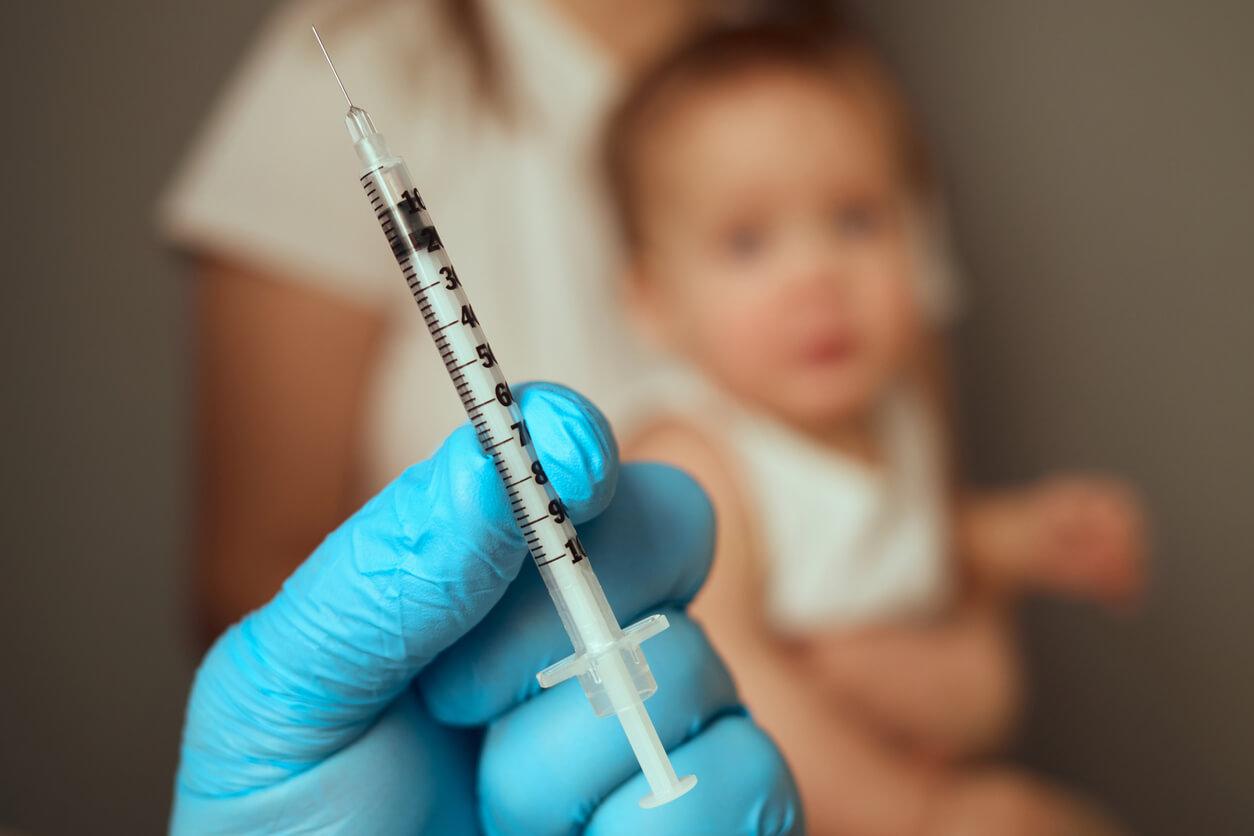
Severe immune deficiencies need individualised vaccination plans
Addressing Common Misconceptions
Autism Spectrum Disorders
Parents are sometimes upset about vaccination safety for children with autism. A 2023 study of 1,335 children (762 with neurodevelopmental disorders) who received COVID-19 vaccination found that autism and ADHD were NOT associated with increased risk of adverse effects. Researchers concluded that "children with neurodevelopmental disorders can be reassured that SARS-CoV-2 vaccination is a safe regimen." 14
Fragile X Syndrome
Research shows that children with Fragile X syndrome are as likely as their peers to be fully vaccinated, with over 90% following routine immunisation guidelines. Studies so far do not indicate increased adverse reactions to vaccines in this group, nor do they recommend different vaccination procedures. However, information on vaccine side effects specifically for Fragile X syndrome remains limited. 15-17
Connective Tissue Disorders
Children with conditions such as Ehlers-Danlos syndrome, a group of genetic disorders that affect connective tissues and cause symptoms like highly flexible joints, stretchy and fragile skin, and easy bruising, can safely receive vaccines, including the COVID-19 vaccine. A 2024 survey of 368 individuals with this condition found that 87.2% experienced only mild, expected reactions, and just 3.1% needed emergency care. 18, 19
Special Considerations: Epilepsy
Children with genetic epilepsy syndromes like Dravet syndrome, which cause prolonged febrile and multiple types of seizures and developmental delay, require thoughtful vaccination approaches. While about one-third of children with Dravet syndrome experience their first seizure following routine vaccination, current evidence shows that long-term outcomes do not differ whether the first seizure is linked to vaccination or not. Most importantly, vaccination is still recommended because the benefits of preventing infections (which frequently trigger seizures) outweigh the risks. These children should be vaccinated in a hospital setting with seizure management plans in place. 20 & 21
The Bigger Picture: Why This Matters
Children with genetic conditions often face significant health challenges. Preventing additional illness through vaccination gives them the best chance to thrive. The diseases that vaccines prevent, like pneumonia, meningitis, and severe flu, can be hazardous for children who already have underlying health conditions.
Research and scientific study show for the vast majority of children with genetic disorders, vaccination is not only safe but essential. When special precautions are needed, doctors can modify the approach while still providing protection. 22
What This Means for Families
If your child has a genetic condition:
- Follow the standard vaccination schedule unless your doctor specifically advises otherwise.
- Ask questions; your healthcare provider should clarify any modifications and why they're recommended.
- Do not delay; these children often need protection even more than others.
- Stay informed; the evidence consistently supports vaccination for children with genetic conditions. 23
The overwhelming scientific consensus supports vaccination for children with genetic disorders while recognising that individualised approaches may sometimes be needed. 24, 25 Every child deserves protection from preventable diseases, and vaccination provides that protection safely and effectively for all children, including those with genetic conditions.
We hope this article was helpful. For more information from Cima Care, please visit their CPD Member Directory page. Alternatively, you can go to the CPD Industry Hubs for more articles, courses and events relevant to your Continuing Professional Development requirements.
REFERENCES
1- The. Science Behind the Vaccine Schedule [Internet]. Chop.edu. 2025. Available from: https://www.chop.edu/vaccine-education-center/vaccine-schedule/science-behind-vaccine-schedule
2- Doherty M, Schmidt-Ott R, Santos JI, Stanberry LR, Hofstetter AM, Rosenthal SL, et al. Vaccination of special populations: Protecting the vulnerable. Vaccine. 2016 Dec;34(52):6681–90.
3- Bull MJ, Trotter T, Santoro SL, Christensen C, Grout RW. Health supervision for children and adolescents with down syndrome. Pediatrics [Internet]. 2022 Apr 18;149(5). Available from: https://publications.aap.org/pediatrics/article/149/5/e2022057010/186778/Health-Supervision-for-Children-and-Adolescents
4- Praveen N. K. Pitchan Velammal, Balasubramanian S, Fathima Shehnaz Ayoobkhan, Mohan K, Aggarwal P, Rabaan AA, et al. COVID‐19 in patients with Down syndrome: A systematic review. Immunity, inflammation and disease [Internet]. 2024 Mar 1;12(3). Available from: https://www.ncbi.nlm.nih.gov/pmc/articles/PMC10949394/
5- The. The GLOBAL COVID-19 & Down Syndrome Vaccine Tracker | Global Down Syndrome Foundation [Internet]. Global Down Syndrome Foundation. 2024. Available from: https://www.globaldownsyndrome.org/covid-19-vaccination-tracker/
6-Langkamp DL, Dusseau A, Brown MF. Vaccine Hesitancy and Low Immunization Rates in Children with Down Syndrome. The Journal of Pediatrics. 2020 Aug;223:64-67.e2.
7- Zubarioglu T, Oral‐Cebeci S, Hopurcuoglu D, Uygur E, Ahmadzada S, Uzunyayla‐Inci G, et al. Safety of COVID ‐19 vaccines in children with inborn errors of metabolism in terms of developing metabolic decompensation. Journal of Paediatrics and Child Health. 2022 Sep 29;
8- Morgan TM, Schlegel C, Edwards KM, Welch-Burke T, Zhu Y, Sparks R, et al. Vaccines Are Not Associated With Metabolic Events in Children With Urea Cycle Disorders. PEDIATRICS. 2011 Apr 11;127(5):e1147–53.
9- Vaccinations for people living with muscle wasting conditions - Muscular Dystrophy UK [Internet]. Muscular Dystrophy UK. 2025 [cited 2025 Aug 5]. Available from: https://www.musculardystrophyuk.org/support/information/your-condition/vaccinations-for-people-living-with-muscle-wasting-conditions/
10- Vaccination Recommendations [Internet]. Parent Project Muscular Dystrophy. Available from: https://www.parentprojectmd.org/care/care-guidelines/by-area/vaccination-recommendations/
11- CDC. Altered Immunocompetence [Internet]. Vaccines & Immunizations. 2024. Available from: https://www.cdc.gov/vaccines/hcp/imz-best-practices/altered-immunocompetence.html
12- Sahn B, Lu Y, Hui‐Yuen JS, Fishbein J, Gottlieb BS, Eberhard BA, et al. The safety of COVID‐19 vaccination in immunocompromised children and young adults with immune‐mediated inflammatory disease. Acta pædiatrica. 2023 Jan 6;112(4):794–801.
13- Russo C, Otero A, Uranga M, Seery V, Raiden S, Algieri S, et al. Immunological memory to COVID-19 vaccines in immunocompromised and immunocompetent children. Frontiers in Cellular and Infection Microbiology. 2025 Feb 17;15.
14-Wang LJ, Tsai CS, Chou WJ, Li CJ, Lee SY, Chen YC, et al. Medical outcomes of children with neurodevelopmental disorders after SARS-CoV-2 vaccination: A six-month follow-up study. Vaccine [Internet]. 2023 May 29;41(29):4267–73. Available from: https://www.sciencedirect.com/science/article/pii/S0264410X2300628X
15- Gilbertson KE, Jackson HL, Dziuban EJ, Sherman SL, Berry-Kravis EM, Erickson CA, et al. Preventive care services and health behaviors in children with fragile X syndrome. Disability and Health Journal. 2019 Oct;12(4):564–73.
16- Wexler M. Fragile X Patients Appear to Have Less Active Immune System, Study... [Internet]. Fragile X News Today. 2020. Available from: https://fragilexnewstoday.com/news/less-active-immune-system-evident-in-fragile-x-patients-study-suggests/
17- Medina T. Preventive Care Services in Fragile X Syndrome [Internet]. NFXF. 2019. Available from: https://fragilex.org/research-fx/preventive-care-services/
18- Guerrerio AL, Mateja A, MacCarrick G, Fintzi J, Brittain E, Frischmeyer-Guerrerio PA, et al. Web-based survey investigating cardiovascular complications in hypermobile Ehlers-Danlos syndrome after COVID-19 infection and vaccination. PLoS ONE. 2024 Mar 21;19(3):e0298272–2.
19- COVID-19 Vaccines - The Ehlers Danlos Society [Internet]. The Ehlers Danlos Society. 2022. Available from: https://www.ehlers-danlos.com/covid-19-vaccines/
20- Epilepsy and immunisation - The Melbourne Vaccine Education Centre (MVEC) [Internet]. The Melbourne Vaccine Education Centre (MVEC). 2023. Available from: https://mvec.mcri.edu.au/references/epilepsy-and-immunisation/
21- Protocol for immunisation of children with Dravet syndrome or other vaccine-proximate seizures [Internet]. [cited 2025 Aug 5]. Available from: https://mvec.mcri.edu.au/wp-content/uploads/2021/03/Protocol-for-immunisation-of-children-with-Dravet-syndrome-or-other-vaccine-proximate-seizures_2.pdf
22- Reingold ELB, Bennion M, Meyer MN. Immunizations in Children With Chronic Diseases: A State of the Science Review With Implications for Practice Change. Journal of Pediatric Health Care. 2022 Feb;
23- Parenting: All About Vaccines [Internet]. UNICEF USA. 2019. Available from: https://www.unicefusa.org/what-unicef-does/parenting/vaccinating-your-child
24- Barberi I, Venera Tiralongo, Marseglia L. Vaccination risks in children with rare diseases. The Italian Journal of Pediatrics/Italian journal of pediatrics [Internet]. 2015 Sep 30 [cited 2025 Aug 6];41(S2). Available from: https://pmc.ncbi.nlm.nih.gov/articles/PMC4707646/
25- Hofstetter AM, LaRussa P, Rosenthal SL. Vaccination of adolescents with chronic medical conditions: Special considerations and strategies for enhancing uptake. Human Vaccines & Immunotherapeutics. 2015 Jul 25;11(11):2571–81.