


This informal CPD article ‘Vaccine Safety: What the Latest Science Really Shows’ was provided by Cima Care, who offer extensive training in vaccination and public health, advancing global health initiatives.
Consider the following hypothetical example. When Sarah's paediatrician recommended her daughter's routine vaccinations, she found herself overwhelmed by conflicting information online. "Are they really safe?" She wondered. "What about all those stories I've read?" Like many parents today, Sarah wanted to make the best decision for her child but felt caught between alarming headlines and medical recommendations.
The good news is that the scientific community has been listening to these concerns. Over the past two years, researchers have conducted the most comprehensive vaccine safety studies, analysing data from nearly 100 million people worldwide. The findings provide clear, evidence-based answers to the questions parents and healthcare providers have been asking.
Why Healthcare Providers' Voice Matters Most
Despite the flood of information online, research shows that healthcare providers remain the most trusted source of vaccine information. 1 This trust comes with an important responsibility: effectively communicating both the overwhelming evidence of vaccine safety and the reality of rare adverse events.
Here is something encouraging: when healthcare professionals receive training in evidence-based communication strategies, including motivational interviewing and patient-centred approaches, it makes a real difference. Studies show that clinics using these techniques saw higher HPV vaccination rates, improving by about 9.5% compared to those that did not. 2
The facts speak clearly: serious vaccine side effects are very rare, and many systems, including near real-time monitoring programmes, exist that detect potential vaccine safety problems much faster than prior approaches.3
The Largest Vaccine Safety Studies Ever Conducted
Between 2024 and 2025, scientists completed unprecedented safety investigations that provide definitive answers to persistent questions. These are not small studies; they involved tens of millions of people across multiple countries, giving researchers the statistical power to detect even very rare side effects.
The 99 Million Person Study
The Global COVID-19 Vaccine Safety Project represents the largest vaccine safety analysis ever performed. Published in 2024, this multinational study analysed data from 99,068,901 vaccinated individuals across 10 sites in 8 countries, tracking over 183 million doses of various COVID-19 vaccines.
This massive study confirmed previously identified rare side effects while quantifying risks with remarkable precision. For instance, researchers have found increased rates of Guillain-Barré syndrome (an autoimmune nerve disorder) following the first dose of adenovirus vector-based COVID-19 vaccines, as well as very rare cases of brain inflammation after certain mRNA vaccines. 4
What makes this study particularly valuable is its transparency. As noted by a Co-director of the Global Vaccine Data Network, "By making the data dashboards publicly available, we are able to support greater transparency and stronger communications to the health sector and public." 5
Long-Term Safety Evidence
One of the most common concerns about newer vaccines is long-term safety. The COVE trial, published in 2024, provides reassuring answers. Researchers tracked 29,035 participants for more than 25 months after their primary vaccination with an mRNA COVID-19 vaccine. 6
The results were clear: Almost no new safety concerns emerged during this extended monitoring period, with serious vaccine-related events occurring in fewer than 0.1% of people who received boosters. Notably, people with weakened immune systems showed similar or even lower rates of side effects compared to healthy individuals. 6 & 7
The National Academies Review
In 2024, after examining extensive evidence, national academies concluded that mRNA COVID-19 vaccines can very rarely cause myocarditis (inflammation of the heart muscle) but do not cause infertility, Guillain-Barré syndrome, Bell's palsy (sudden, temporary weakness or paralysis on one side of the face caused by nerve inflammation), or heart attacks. In 2024 the committee vice chair emphasised an important point: "Despite a large body of evidence from extraordinary efforts by investigators around the world, our committee found that in many cases, if not most, evidence was insufficient to accept or reject causality for a particular potential harm from a specific COVID-19 vaccine." This honest acknowledgement reflects the scientific community's commitment to following the evidence, not assumptions. 8&11
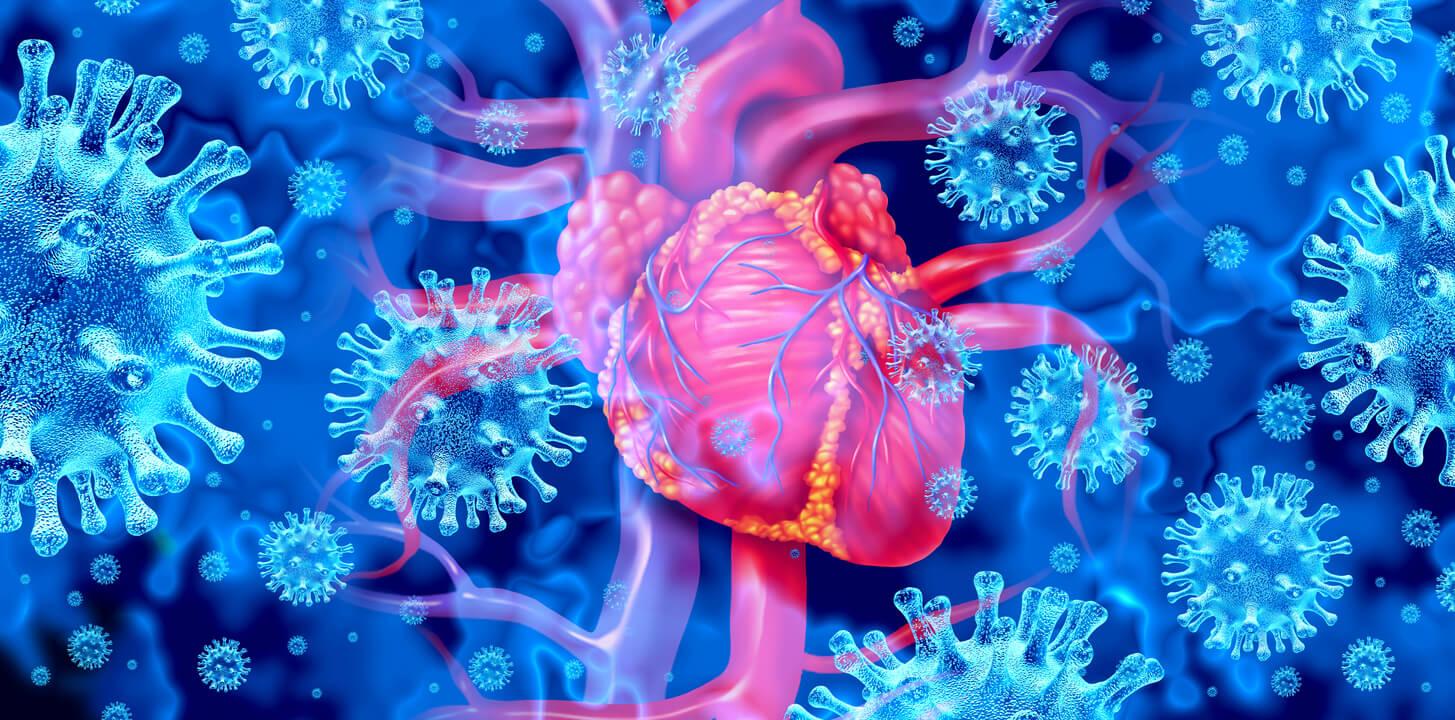
Myocarditis inflammation of heart muscle
Understanding Specific Safety Concerns
Beyond broad population studies, researchers have investigated specific safety questions that parents and healthcare providers frequently ask. These targeted studies provide clear, evidence-based answers to common concerns, including the two below:
Myocarditis: Putting the Risk in Context
Myocarditis, inflammation of the heart muscle, has been one of the most discussed vaccine side effects. It is important to understand both risk and context. Myocarditis can cause chest pain and irregular heartbeats, while pericarditis (inflammation of the sac around the heart) causes sharp chest pain that often worsens with deep breaths. 9
Surveillance data for the 2024–2025 COVID-19 vaccines indicate that the highest observed rate of myocarditis was 188 cases per million doses in males aged 16–17 years following a monovalent booster, while no cases were reported in males aged 12–17 years after a bivalent booster. 10
A monovalent vaccine targets one virus strain, while a bivalent vaccine protects against two—typically the original strain plus a newer variant. The difference shows that newer bivalent boosters may have a lower risk of myocarditis in this age group. 26 Importantly, a high percentage of people diagnosed with vaccine-related myocarditis achieved full or probable full recovery according to their cardiologists. 12&13
Safety for the Youngest: Reassuring Paediatric Data
A study, examining 5.1 million children in England aged 5-11, found no increased risk of adverse events in the 42 days following COVID-19 vaccination. This extensive paediatric study provides strong reassurance for parents and healthcare providers. 14
How Modern Technology Monitors Vaccine Safety
One of the most remarkable advances in vaccine safety is not the vaccines themselves, but how we monitor them. Today's safety surveillance systems utilise cutting-edge technology to detect potential problems more quickly and accurately than ever before.25 Two of the most transformative developments—AI-powered safety monitoring and advanced machine learning—now work hand-in-hand to shift vaccine safety oversight from a historically reactive practice to a truly proactive and dynamic process. 14
AI-Powered Safety Monitoring
Artificial intelligence has transformed vaccine safety monitoring from a reactive to a proactive approach. Modern AI systems can process millions of safety reports in real time, detecting patterns that might take humans months to identify. 15
Through partnerships with major healthcare organisations, AI can enable rapid analysis across millions of vaccinated individuals. This system can successfully identify both myocarditis/pericarditis and severe allergic reactions consistent with published research while monitoring specific adverse events of concern.16
Machine learning algorithms have dramatically improved efficiency. Automated literature review systems reduce the volume of human reviews. Advanced causality assessment models achieve remarkable accuracy, substantially improving traditional manual assessments.17&18
Social Media and Early Warning Systems
Health organisations have developed an AI-powered early warning system that monitors social media and other online sources in real time. This innovative approach identifies emerging vaccine-related concerns and misinformation before they significantly impact vaccination behaviour, enabling public health officials to respond proactively.19&20

International vaccine safety monitoring
Global Cooperation Creates Stronger Safety Nets
A truly international effort is underway in vaccine safety monitoring. In 2022, 92 out of 215 affiliated countries and territories (43%) achieved the target of reporting at least one serious adverse event per million population annually, up from 51 out of 214 (24%) in 2020. This represents marked progress in global monitoring of vaccine safety.21
Moreover, some organisations facilitate active collaboration among regulators worldwide, enabling the rapid sharing of information and the coordination of safety analyses. There are collaborations developing standardised definitions for vaccine side effects, ensuring that healthcare professionals worldwide can recognise and report issues using consistent, reliable criteria. 22
What This Means for You
The vaccine safety landscape today reflects unprecedented scientific rigour, technological innovation, and international cooperation. Studies involving nearly 100 million people provide definitive evidence of overall vaccine safety while honestly quantifying rare adverse events. AI-powered systems monitor safety in real time, detecting potential problems faster than ever before. 23
Yet challenges remain. Routine childhood vaccination rates continue to decline in many places, increasing the risk of outbreaks. These declines are linked to increased vaccine hesitancy, fuelled in part by misinformation and a decline in trust in health authorities. Coverage below target levels, especially for measles, poses a risk to community protection. 24
Key Takeaways:
- The most comprehensive vaccine safety studies ever conducted, involving nearly 100 million people, confirm strong safety profiles while honestly documenting rare side effects.
- Modern AI-powered monitoring systems detect safety signals faster and more accurately than ever before.
- Rare side effects like myocarditis are well-documented, and the risk-benefit ratio strongly favours vaccination.
- Healthcare providers remain the most trusted source of vaccine information, and their communication skills significantly impact vaccination decisions.
- International cooperation ensures that safety insights discovered anywhere in the world are immediately incorporated into global public health protection efforts.
Every vaccination decision is personal and should be made in consultation with your healthcare provider, who can discuss your specific situation and answer individual questions. The evidence overwhelmingly supports continued confidence in vaccine safety, backed by the most comprehensive surveillance infrastructure ever developed. As we continue advancing monitoring technologies and communication strategies, vaccines remain among the safest and most effective public health interventions available. 25
We hope this article was helpful. For more information from Cima Care, please visit their CPD Member Directory page. Alternatively, you can go to the CPD Industry Hubs for more articles, courses and events relevant to your Continuing Professional Development requirements.
REFERENCES
1- Pierz AJ, Rauh L, Masoud D, Alanna Kate Cruz, P. Christopher Palmedo, Ratzan SC, et al. Supporting US healthcare providers for successful vaccine communication. Supporting US healthcare providers for successful vaccine communication. 2023 May 2;23(1).
2- Ilyasova AA, Queen TL, Gilkey M, Fogel BN, Odebunmi OO, Yanguela J, et al. Use of presumptive recommendations and other strategies to encourage HPV vaccine uptake: Results from a national survey of primary care health professionals. PLoS ONE [Internet]. 2025 Aug 4 [cited 2025 Sep 10];20(8):e0327872–2. Available from: https://pmc.ncbi.nlm.nih.gov/articles/PMC12321062/
3- kffjoshuam. How Does the Federal Government Monitor Vaccine Safety? | KFF [Internet]. KFF. 2025 [cited 2025 Sep 8]. Available from: https://www.kff.org/other-health/how-does-the-federal-government-monitor-vaccine-safety/
4- K. Faksova, Walsh D, Jiang Y, Griffin J, Phillips A, Gentile A, et al. COVID-19 vaccines and adverse events of special interest: A multinational Global Vaccine Data Network (GVDN) cohort study of 99 million vaccinated individuals. Vaccine. 2024 Feb 1;42(9).
5- Cassard C. 99 Million People Included in Largest Global Vaccine Safety Study - Brighton Collaboration [Internet]. Brighton Collaboration. 2024. Available from: https://brightoncollaboration.org/press-release-gvdn-largest-global-vaccine-safety-study/
6- Baden LR, El HM, Essink B, Follmann D, Hachigian G, Strout C, et al. Long-term safety and effectiveness of mRNA-1273 vaccine in adults: COVE trial open-label and booster phases. Nature Communications [Internet]. 2024 Aug 29;15(1). Available from: https://www.nature.com/articles/s41467-024-50376-z
7-Xu W, Ren W, Wu T, Wang Q, Luo M, Yi Y, et al. Real-World Safety of COVID-19 mRNA Vaccines: A Systematic Review and Meta-Analysis. Vaccines [Internet]. 2023 Jun 19;11(6):1118–8. Available from: https://www.ncbi.nlm.nih.gov/pmc/articles/PMC10301865/
8- hnesich_drupal. NASEM releases evidence review on COVID-19 vaccine safety | AHA News [Internet]. www.aha.org. Available from: https://www.aha.org/news/headline/2024-04-16-nasem-releases-evidence-review-covid-19-vaccine-safety
9- Management of Myocarditis and Pericarditis: What Patients Need to Know ESC Clinical Practice Guidelines for the [Internet]. [cited 2025 Sep 8]. Available from: https://www.escardio.org/static-file/Escardio/Guidelines/Documents/ESC-patient-guidelines-Myocarditis-Pericarditis..pdf
10- CDC. Grading of Recommendations, Assessment, Development, and Evaluation (GRADE): Updated COVID-19 vaccine (2024-2025 Formulation) [Internet]. Advisory Committee on Immunization Practices (ACIP). 2025 [cited 2025 Sep 8]. Available from: https://www.cdc.gov/acip/grade/covid-19-2024-2025-6-months-and-older.html
11- Committee to Review Relevant Literature Regarding Adverse Events Associated with Vaccines, Board on Population Health and Public Health Practice, Health and Medicine Division, National Academies of Sciences, Engineering, and Medicine. Evidence Review of the Adverse Effects of COVID-19 Vaccination and Intramuscular Vaccine Administration [Internet]. Bass AR, Stratton K, Kumova OK, Rosenberg D, editors. National Academies Press. Washington, D.C.: National Academies Press; 2024. Available from: https://nap.nationalacademies.org/catalog/27746/evidence-review-of-the-adverse-effects-of-covid-19-vaccination-and-intramuscular-vaccine-administration
12- Meyer S. Update on CDC's COVID-19 Vaccine Safety Monitoring [Internet]. 2025 [cited 2025 Sep 8]. Available from: https://www.cdc.gov/acip/downloads/slides-2025-06-25-26/04-Meyer-COVID-508.pdf
13- McDonald J. Q&A on the 2024-2025 COVID-19 Vaccines - FactCheck.org [Internet]. FactCheck.org. 2024. Available from: https://www.factcheck.org/2024/10/qa-on-the-2024-2025-covid-19-vaccines/
14- Copland E, Patone M, Saatci D, Handunnetthi L, Hirst J, Hunt DPJ, et al. Safety outcomes following COVID-19 vaccination and infection in 5.1 million children in England. Nature Communications [Internet]. 2024 May 27;15(1):3822. Available from: https://www.nature.com/articles/s41467-024-47745-z#Tab1
15- Nagar A, Gobburu J, Chakravarty A. Artificial intelligence in pharmacovigilance: advancing drug safety monitoring and regulatory integration. Therapeutic Advances in Drug Safety [Internet]. 2025 Jul;16. Available from: https://pmc.ncbi.nlm.nih.gov/articles/PMC12317250/
16- Research C for BE and. COVID-19 Vaccine Safety Surveillance. Center for Biologics Evaluation and Research [Internet]. 2021 Feb 9; Available from: https://www.fda.gov/vaccines-blood-biologics/safety-availability-biologics/covid-19-vaccine-safety-surveillance
17- IntuitionLabs. AI Applications in Pharmacovigilance and Drug Safety [Internet]. IntuitionLabs. 2025. Available from: https://intuitionlabs.ai/articles/ai-pharmacovigilance-drug-safety
18- Cherkas Y, Ide J, van Stekelenborg J. Leveraging Machine Learning to Facilitate Individual Case Causality Assessment of Adverse Drug Reactions. Drug Safety. 2022 May;45(5):571–82.
19- Tools and innovations [Internet]. www.who.int. Available from: https://www.who.int/teams/regulation-prequalification/regulation-and-safety/pharmacovigilance/guidance/operations/tools-innovations
20- Early warning system [Internet]. www.who.int. Available from: https://www.who.int/groups/global-advisory-committee-on-vaccine-safety/topics/covid-19-vaccines/early-warning-system
21- Blau EF. Progress in Immunization Safety Monitoring — Worldwide, 2020–2022. MMWR Morbidity and Mortality Weekly Report [Internet]. 2023;72. Available from: https://www.cdc.gov/mmwr/volumes/72/wr/mm7249a2.htm
22- Case Definitions - Brighton Collaboration [Internet]. Brighton Collaboration. 2023 [cited 2025 Nov 6]. Available from: https://brightoncollaboration.org/case-definitions/
23- Team DigitalDefynd. Role of AI in Vaccine Development and Distribution [2025] [Internet]. DigitalDefynd. 2025. Available from: https://digitaldefynd.com/IQ/ai-in-vaccine-development-distribution/
24- kfflizw. Kindergarten Routine Vaccination Rates Continue to Decline | KFF [Internet]. KFF. 2025. Available from: https://www.kff.org/medicaid/kindergarten-routine-vaccination-rates-continue-to-decline/
25- CDC. About CDC’s Vaccine Safety Monitoring Program [Internet]. Vaccine Safety Systems. 2024. Available from: https://www.cdc.gov/vaccine-safety-systems/about/cdc-monitoring-program.html
26. Haelle T. No Signal for Myocarditis in Updated Moderna mRNA COVID Vaccine [Internet]. Medscape. 2025 [cited 2025 Nov 12]. Available from: https://www.medscape.com/viewarticle/no-signal-myocarditis-updated-moderna-mrna-covid-vaccine-2025a1000svq