



This informal CPD article ‘The Problem Beneath the Surface: Facility Maintenance Failures That Invite Regulatory Trouble’, was provided by Pharmalliance Consulting, who offer specialist support to pharmaceutical companies to maintain and increase quality compliance levels.
Introduction
Facility issues aren’t always dramatic, but they’re often decisive. In recent inspections, regulators have flagged surprisingly basic problems: damaged cleanroom surfaces, leaky ceiling, and worn-out finishes that allow microbial ingress. What looks like minor wear and tear to site staff can register as a major sterility risk to inspectors. And in the Annex 1 Revision era, these issues carry more weight than ever.
What Inspectors Are Seeing
EMA and FDA inspectors have consistently cited companies for poor upkeep of walls, ceilings, and flooring in clean areas. A few recent examples stand out:
- In one case, inspectors observed a pool of liquid in the corner of the formulation area corridor, indicating poor maintenance (such as a leak) or inadequate cleaning practices.
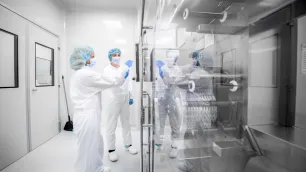
- In another instance, inspectors noted that gowning procedures required operators to remove their shoes when entering Grade D and C areas.
- An FDA warning letter detailed significant residue buildup on equipment components that were purportedly clean. Investigators found that the firm failed to adequately clean and maintain equipment, leading to visible residues.
These aren’t exotic failures. They’re routine issues that accumulate when facilities aren’t given the same attention as the product.
Where the Risk Starts
What’s at stake? Surface degradation creates harbourage points; tiny cracks, peeling coatings, or loose panels where moisture and microbes can accumulate. Once contamination sets in, it becomes much harder to eradicate, especially in Grade A/B zones. And if inspectors see these physical signs, they’ll assume procedural controls aren’t working either.
Under EU Annex 1, facilities must be “designed and maintained to minimise microbial contamination.” That includes sealed, cleanable, and damage-free surfaces. And the expectation isn’t just written, it’s enforced. In 2019, nearly 1 in 4 critical GMP findings cited Annex 1 failures, with facility hygiene high on the list.
Aging Facilities, New Expectations
Many legacy plants are struggling to meet today’s standards. Annex 1 now pushes sites toward modern barrier systems, integrated monitoring, and more rigorous design features. But even before upgrades happen, inspectors expect a preventive maintenance program that identifies and repairs early signs of damage. That means documenting:
- Regular inspection schedules for walls, ceilings, and floors.
- Criteria for re-coating or replacing worn surfaces.
- Response timelines for leaks, water damage, or visible wear.
- Justification is materials don’t meet current standards.
Conclusion
Facility failures are often preventable, but they’re also among the most visible signs of weak GMP control. When cracks appear in the structure, regulators assume cracks may exist in the culture too. The message is clear: stay ahead of wear and tear. Treat every leak, stain, or broken tile as a signal, not just a cosmetic issue. If inspectors can see it, you can be surface they’ll write it up.
We hope this article was helpful. For more information from Pharmalliance Consulting, please visit their CPD Member Directory page. Alternatively, you can go to CPD Industry Hubs for more articles, courses and events relevant to your Continuing Professional Development requirements.
References
U.S. Food and Drug Administration, 2023. Warning Letters Database, United States of America.
The European Commission, 2022. EU Annex 1, Brussels, Belgium.
Parenteral Drug Association, 2015. Technical Report No. 70 Fundamentals of Cleaning and Disinfection Programs for Aseptic Manufacturing Facilities, Maryland, United States of America.
European Medicines Agency, 2013. EudraGMP Database, Amsterdam, The Netherlands.